 [ADINSERTER ROTATE]
ADVERTISEMENT
[ADINSERTER ROTATE]
ADVERTISEMENT
Your peace lily (Spathiphyllum) may not be failing at all—it may simply be trying to communicate its environmental and nutritional needs. Few things frustrate indoor plant enthusiasts more than watching a once-vibrant peace lily slowly lose its vitality. The deep green leaves begin to droop, the growth rate stalls, and those elegant, pristine white spathes (flowers) disappear altogether.
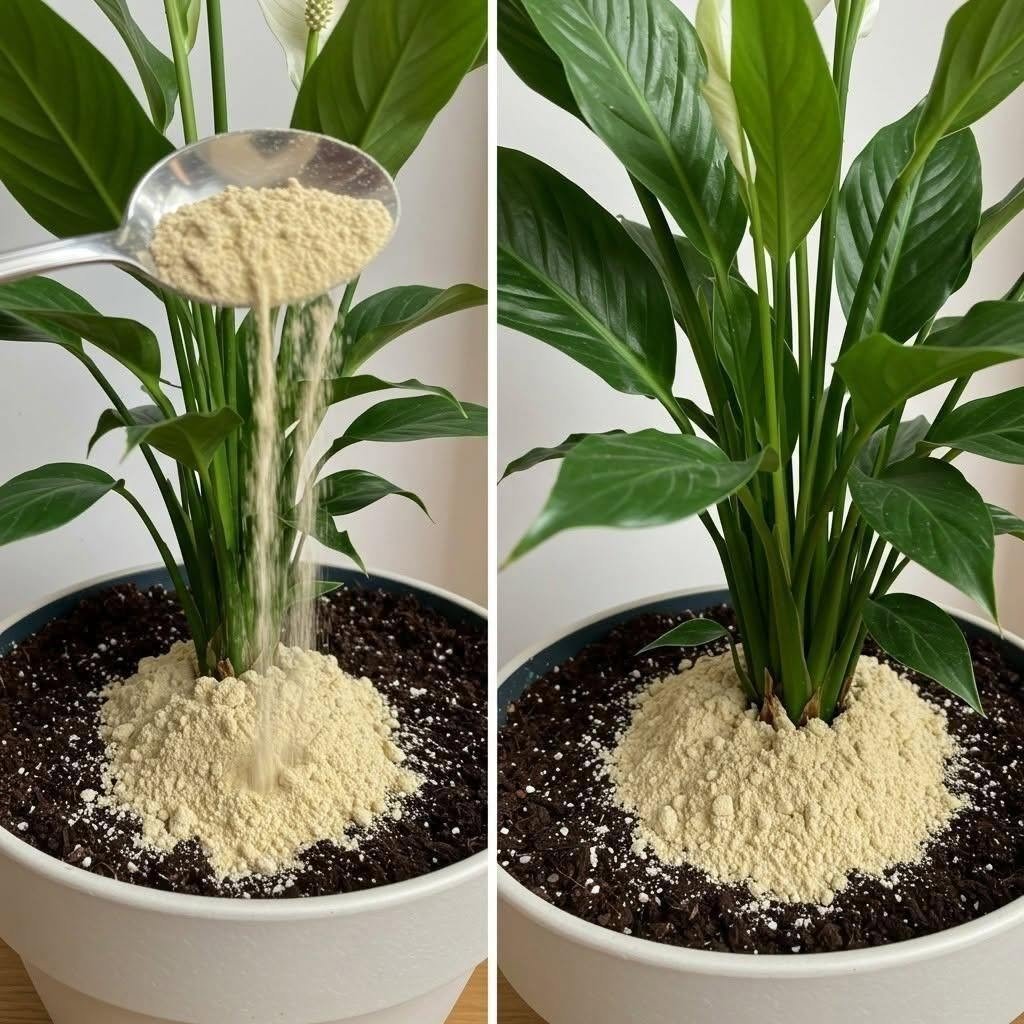
While many turn to expensive synthetic fertilizers or constantly shift the plant from room to room, one of the most effective, gentle bloom boosters might already be sitting in your kitchen waste bin.
Why the Organic “Banana Peel Matrix” Works
Banana peels have rapidly become a cornerstone of organic indoor gardening, and the science behind it is entirely sound. Peace lilies require a specific balance of macronutrients to transition from producing purely vegetative foliage to generating structurally demanding flowers. Banana peels are naturally rich in three critical components:
Potassium ($K$): This macronutrient is the absolute engine behind flower production. Potassium regulates the opening and closing of leaf stomata, optimizes cellular water pressure, and triggers the plant’s enzyme systems to initiate the blooming cycle.
Phosphorus ($P$): Essential for robust root system architecture. A peace lily cannot sustain a heavy bloom cycle without a strong, healthy root network to draw up moisture.
Magnesium ($Mg$): The central atom in the chlorophyll molecule, which drives photosynthesis and keeps the foliage a rich, glossy dark green.
By extracting these water-soluble minerals, you create an incredibly gentle, organic liquid fertilizer that feeds the soil microbes and provides steady, non-burning nourishment to the roots.
How to Prepare Banana Peel Fertilizer Water
1. The Cold-Steep Infusion:
LOOK NEXT PAGE DEAR──►
For Complete Cooking STEPS Please Head On Over To Next Page Or Open button (>)
[ADINSERTER ROTATE] ADVERTISEMENT [ADINSERTER ROTATE] ADVERTISEMENT