 [ADINSERTER ROTATE]
ADVERTISEMENT
[ADINSERTER ROTATE]
ADVERTISEMENT
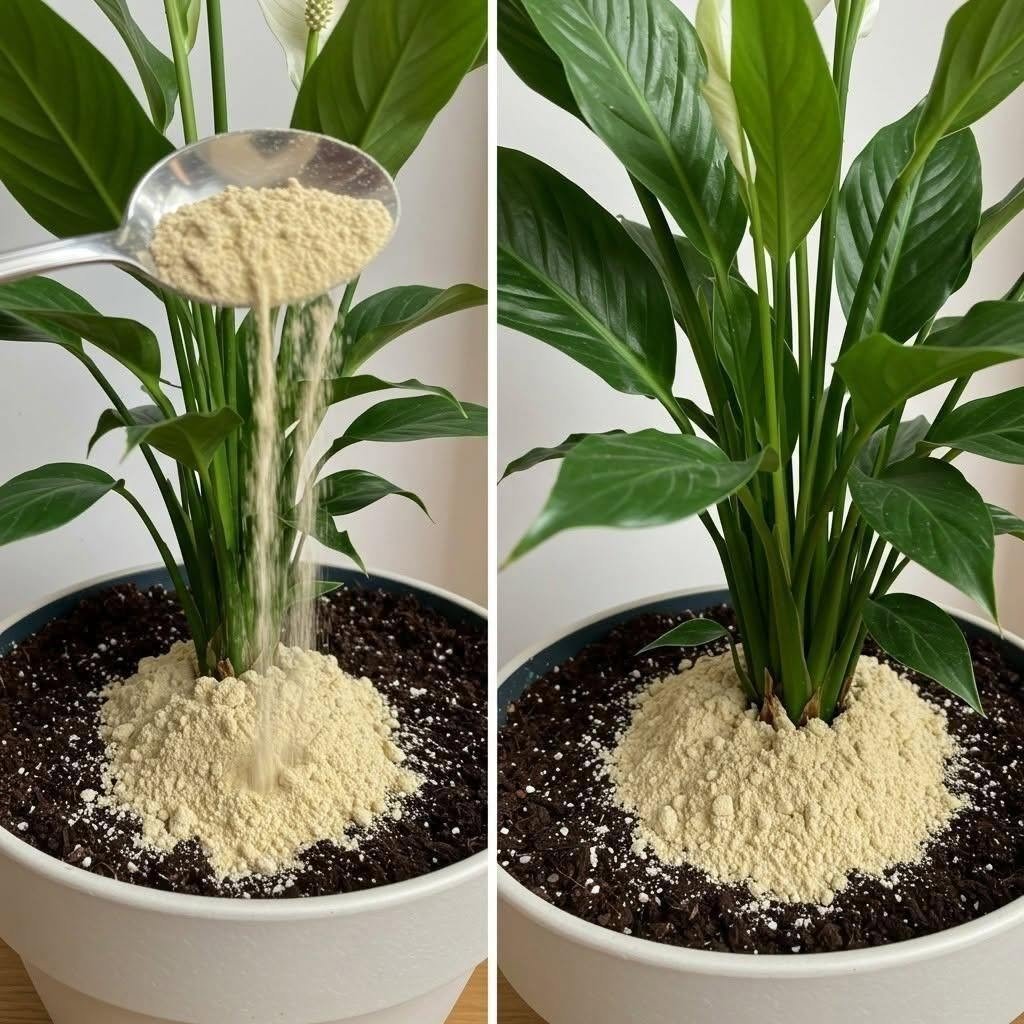
Place one or two fresh, organic banana peels into a clean glass jar or container and fill it with 4 cups of filtered water. Secure a lid tightly to prevent fruit flies or ambient fungi from entering the mixture.
2. The Extraction Window
Allow the peels to steep at room temperature for 24 to 48 hours. During this window, the water will take on a light amber hue as the potassium, phosphorus, and trace minerals diffuse out of the organic plant tissues and into the liquid matrix. Do not steep for longer than 48 hours, or the water may begin to ferment and develop unpleasant odors.
3. Strain and Apply
Fish out the spent banana peels (which can now be tossed safely into your outdoor compost bin) and strain the liquid. Use this nutrient-rich, room-temperature infusion to thoroughly water your peace lily, replacing your standard watering routine once every 3 to 4 weeks during the spring and summer growing seasons.
The Four Pillars of Peace Lily Success
While a regular dose of organic potassium water acts as an exceptional catalyst for blooms, a fertilizer cannot solve foundational environmental stress. To ensure your peace lily flowers reliably year after year, it must exist in an optimized habitat where these four factors work in tandem:
I. Dappled Photonic Exposure (Light)
Peace lilies are understory jungle plants by nature. They thrive in bright, indirect sunlight. Placing them in direct, harsh sunlight will rapidly scorch the leaves, causing unsightly brown burn patches. Conversely, placing them in a dark, windowless hallway will stall photosynthesis entirely; the plant will survive, but it will never have the excess energy required to throw up white blooms.
II. The Hydraulic Goldilocks Zone (Water)
The soil matrix should remain consistently damp to the touch, but never waterlogged.
The Danger of Excess: If the pot sits in standing water inside a drainage tray, the roots will suffer from hypoxia (lack of oxygen), leading to destructive root rot.
The Danger of Drought: Allowing the soil to dry out completely stresses the plant’s vascular system, causing the dramatic, total collapse of the stems and severely halting flower development.
Rule of thumb: Water thoroughly only when the top inch of soil feels dry.
III. Microclimatic Humidity
Hailing from tropical rainforests, peace lilies thrive in relative humidity levels above 50%. Dry indoor air—especially during seasons when artificial heating or air conditioning units are running continuously—causes the tips of the leaves to turn dry and crisp. Elevate the microclimate by grouping plants together, running a small humidifier nearby, or placing the pot on a tray filled with pebbles and a shallow layer of water.
IV. Respecting the Latent Rest Cycles
It is biologically impossible for any living plant to flower continuously without pause. Peace lilies follow natural growth cycles, utilizing the cooler, lower-light winter months to rest and consolidate resources. Do not attempt to force blooms during the winter by over-fertilizing. Allow the plant its natural dormancy, and it will reward your patience with a spectacular flush of white sails as the spring light levels increase.
For Complete Cooking STEPS Please Head On Over To Next Page Or Open button (>)
[ADINSERTER ROTATE] ADVERTISEMENT [ADINSERTER ROTATE] ADVERTISEMENT